

Economy · 13. March 2026
A recent analysis by the Institute for SME Research (IfM) Bonn shows that the increase in digitalization in small and medium-sized enterprises continues. In particular, the use of AI applications and cloud computing is increasing.
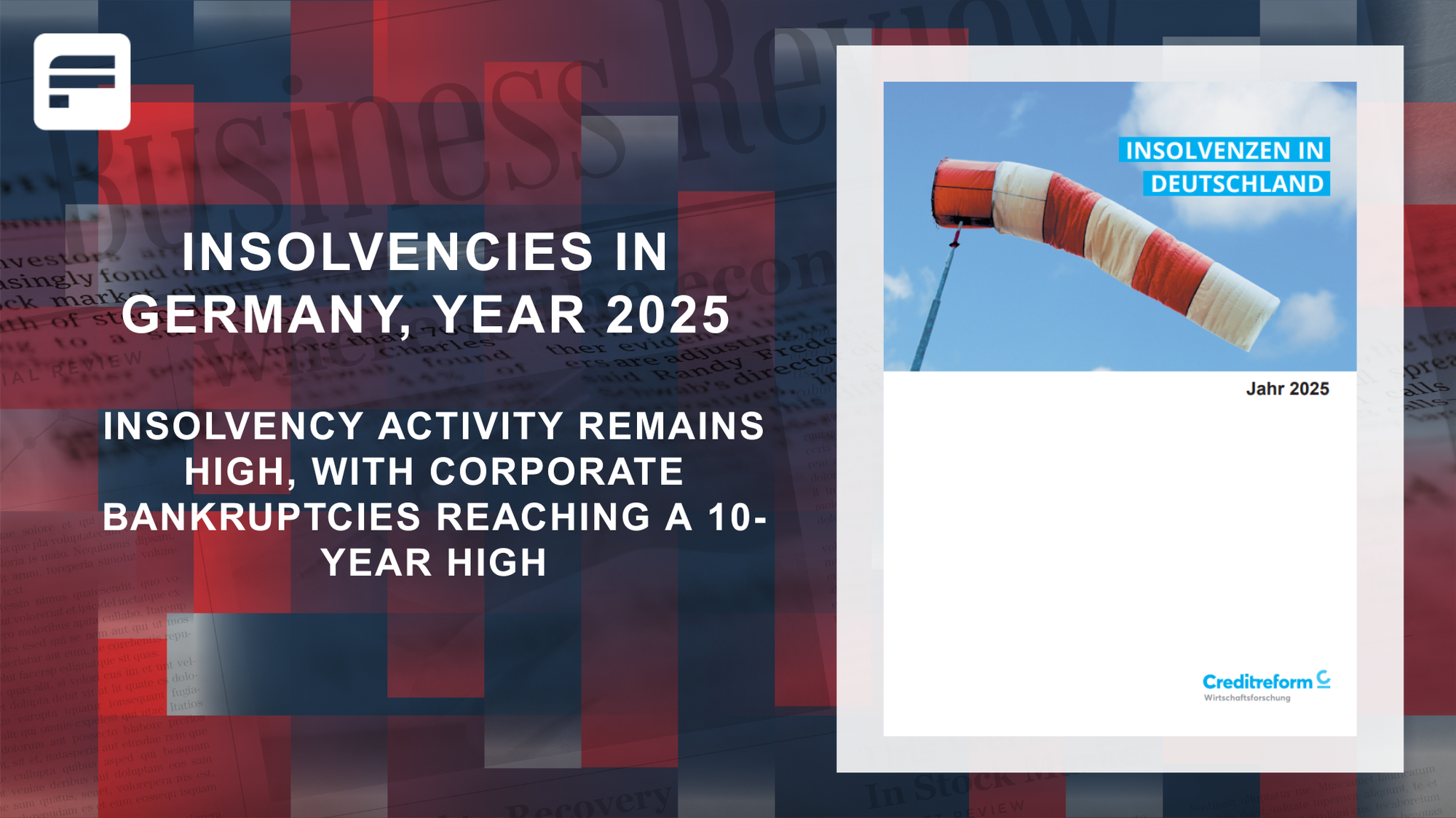
Insolvencies · 22. December 2025
The economic turmoil continues to hit businesses hard. Insolvency activity remains high, with corporate bankruptcies reaching a 10-year high of 23,900 cases. Similar to the increasing consumer debt, the number of personal bankruptcies is also rising significantly.

EU Newsletter · 30. October 2025
The paper urges the European Commission to adopt a two-stage approach: first, to make targeted adjustments through the Digital Omnibus initiative in the short term, and later to launch a broader discussion on a potential data protection reform.

Insolvencies · 16. May 2025
The poor economic situation is reflected in the increasing number of corporate bankruptcies, not only in Germany – but also in Europe.

Economy · 27. February 2025
The recent rapid increase in the number of bankruptcies also has its good side: Among the companies that had to give up, many were zombie companies that were only able to survive for so long thanks to special circumstances and that damaged the economy.

Economy · 15. January 2025
Corporate insolvencies in Germany are rising for the third year in a row. At the end of 2024, a new record high of 22,400 bankrupt companies was recorded.

FEBIS · 31. May 2024
The new Code of Conduct and the adapted retention periods elaborated by the German Association “Die Wirtschaftsauskunfteien eV” (“DW”), which represents the interests of the major German credit reporting agencies, have been approved by the Data Protection Authority.

Economy · 30. April 2024
The mood of medium-sized businesses in Germany deteriorated further in spring 2024. This is shown by the current study by Creditreform Wirtschaftsforschung from Neuss, for which around 1,250 small and medium-sized companies were surveyed.

Economy · 15. March 2024
It was only a short interim high - in 2022 after the corona pandemic, the economy in Germany got going again. But with the outbreak of war in Ukraine, all hopes of a lasting recovery had to be buried.

Economy · 20. February 2024
War and crises have weakened economies worldwide - especially those of industrialized nations. While Europe and the USA are slowly recovering, Germany is lagging behind.