

FEBIS · 03. June 2026
FEBIS is pleased to announce its appointment as a member of the AI Act Advisory Forum, a key stakeholder body established under the European Union's AI Act to support the implementation of Europe's new framework for trustworthy artificial intelligence.
EU Newsletter · 20. May 2026
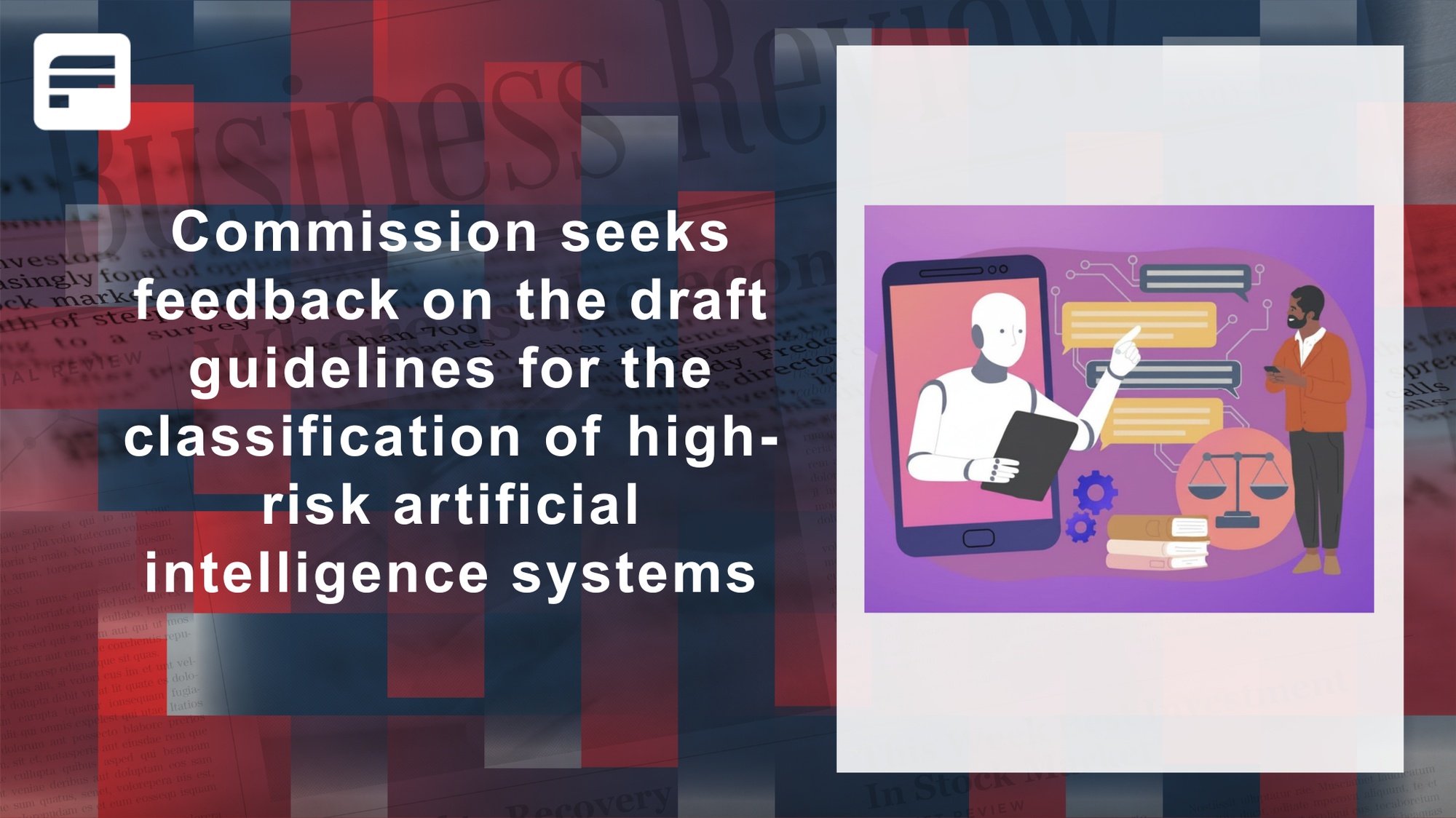
These Guidelines aim to support providers and deployers of AI systems, as well as competent market surveillance authorities, in assessing whether an AI system should be classified as high-risk, thereby facilitating the uniform application and effective enforcement of Article 6 AI Act.
EU Newsletter · 27. March 2026
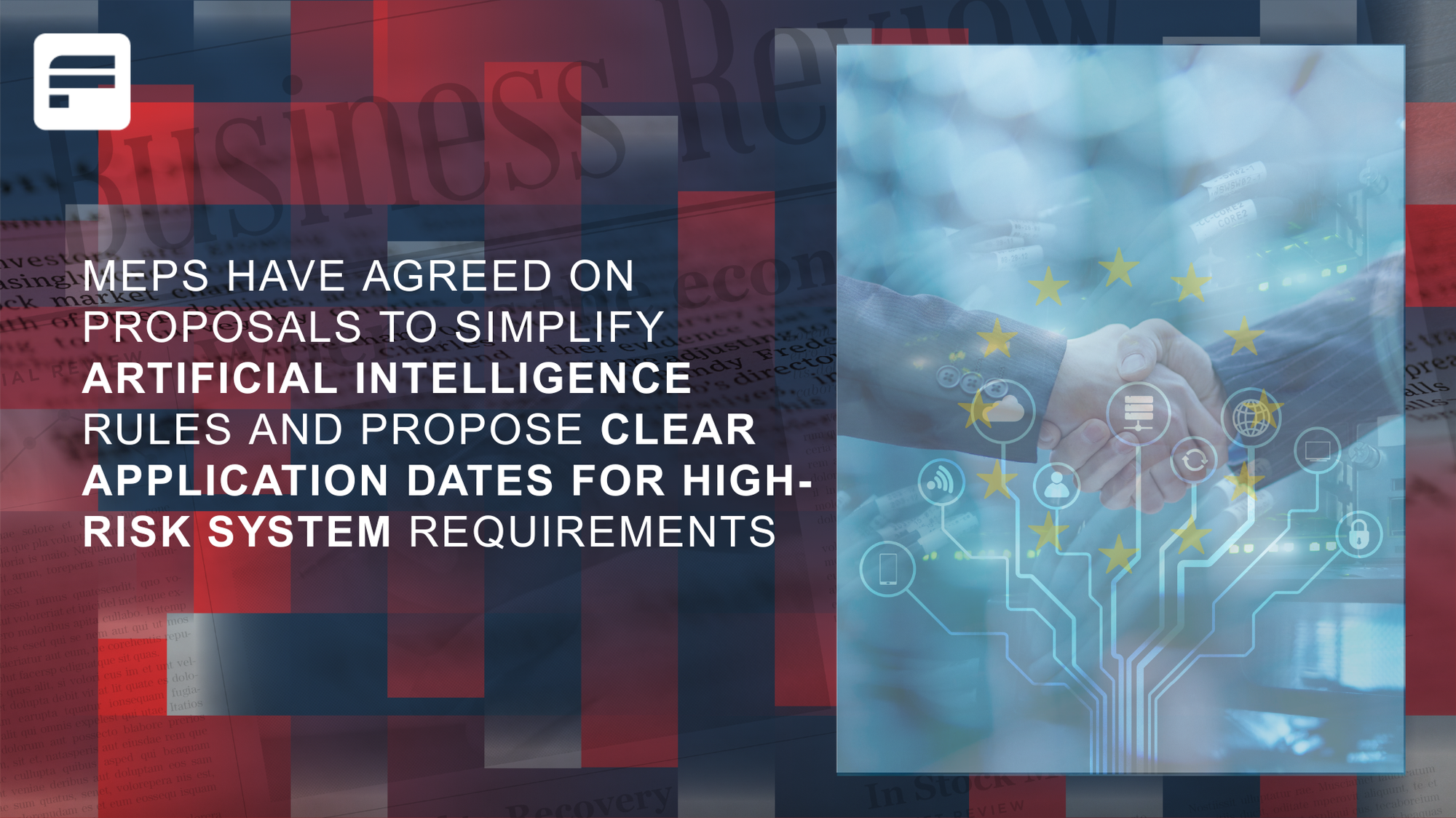
MEPs have agreed on proposals to simplify artificial intelligence rules and propose clear application dates for high-risk system requirements and a ban on AI “nudifier” systems.

EU Newsletter · 12. March 2026
On Wednesday, March 11th, Parliament approved the Council of Europe’s Framework Convention on AI, tackling risks AI poses to fundamental democratic values at international level.

EU Newsletter · 28. January 2026
EU governments are moving toward a fixed timeline for delayed AI Act high-risk obligations in a first compromise text on the AI amendment package, removing the European Commission’s ability to trigger duties early.

EU Newsletter · 30. October 2025
The paper urges the European Commission to adopt a two-stage approach: first, to make targeted adjustments through the Digital Omnibus initiative in the short term, and later to launch a broader discussion on a potential data protection reform.
EU Newsletter · 08. October 2025
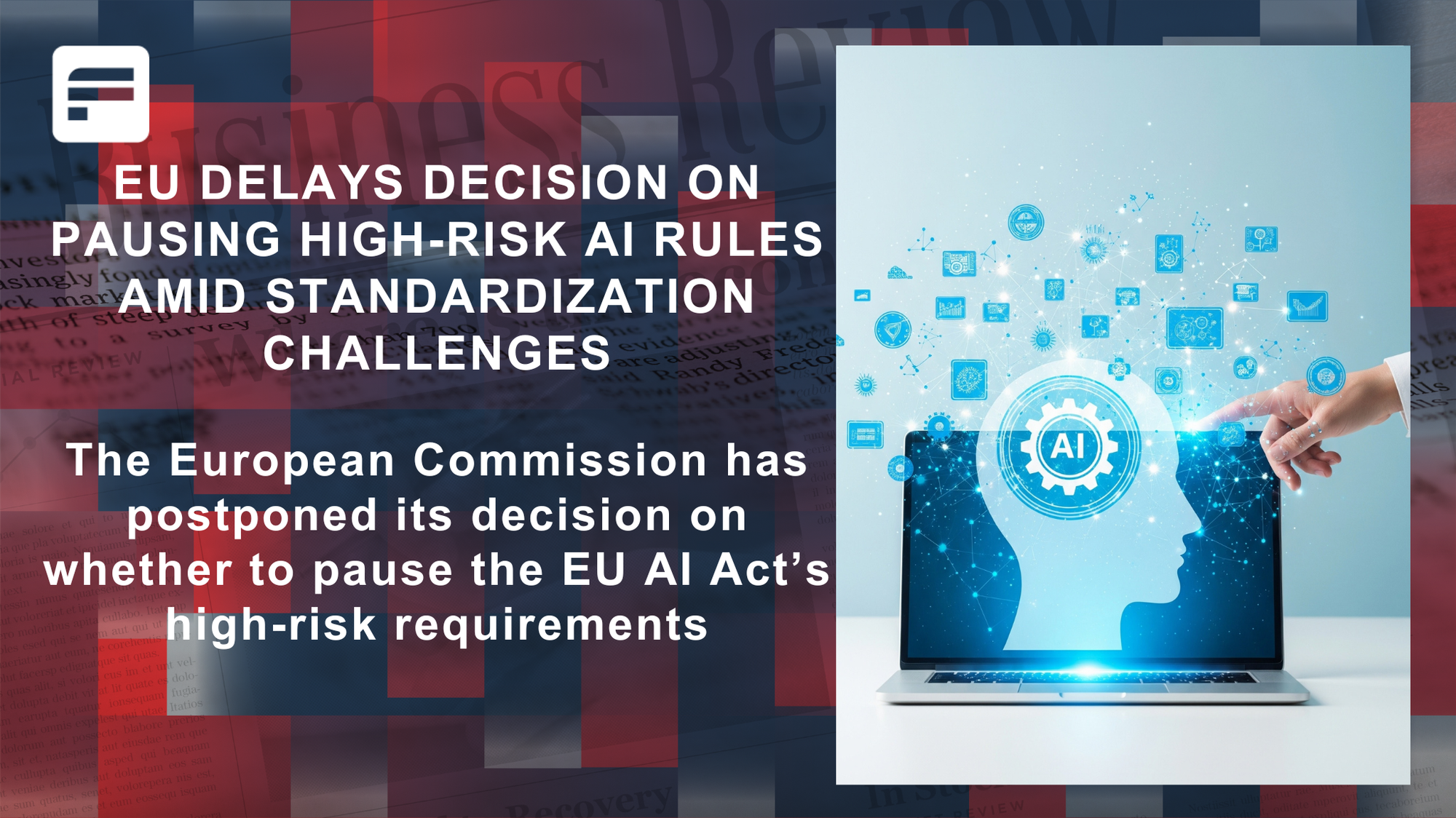
The European Commission has postponed its decision on whether to pause the EU AI Act’s high-risk requirements, leaving businesses waiting for clarity. A final announcement is now expected in November as part of a broader digital legislation package.

EU Newsletter · 01. August 2025
Commission presents voluntary sustainability reporting standard to ease burden on SMEs (VSME) and urges Member States to finalize AI Act implementation
EU Newsletter · 29. April 2025
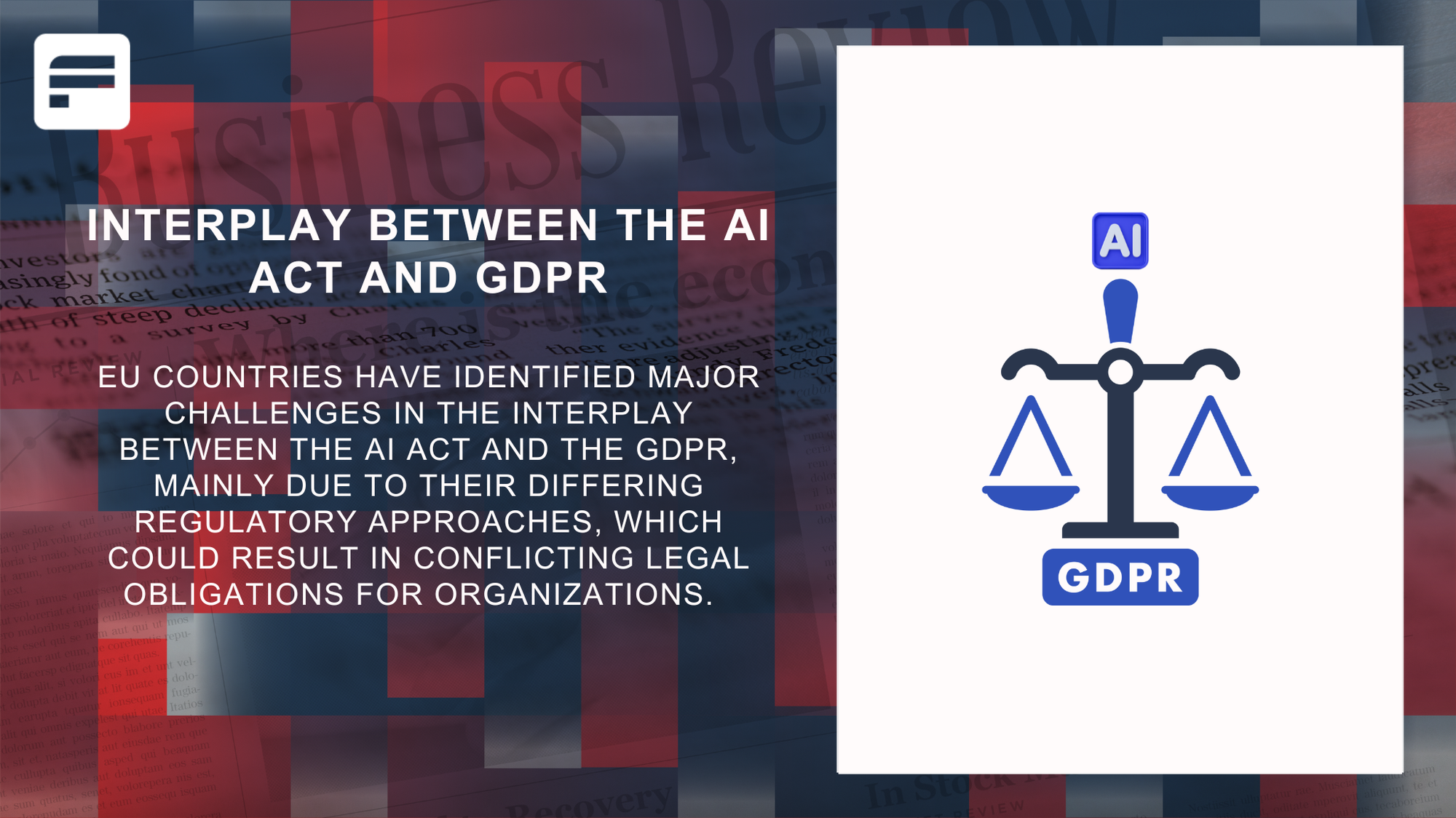
Main challenges of AI Act-GDPR interplay identified by EU countries, mainly due to their differing regulatory approaches, which could result in conflicting legal obligations for organizations.

EU Newsletter · 21. May 2024
The Council of the European Union adopted the agreement in trilogue on the proposed regulation on common rules on artificial intelligence (AI Act).