

Economy · 13. March 2026
A recent analysis by the Institute for SME Research (IfM) Bonn shows that the increase in digitalization in small and medium-sized enterprises continues. In particular, the use of AI applications and cloud computing is increasing.
Insolvencies · 08. July 2025
Insolvencies in Germany continue to rise, reaching a ten-year high of 11,900 corporate insolvencies.

Insolvencies · 16. May 2025
The poor economic situation is reflected in the increasing number of corporate bankruptcies, not only in Germany – but also in Europe.

Economy · 27. February 2025
The recent rapid increase in the number of bankruptcies also has its good side: Among the companies that had to give up, many were zombie companies that were only able to survive for so long thanks to special circumstances and that damaged the economy.
Economy · 15. January 2025
Corporate insolvencies in Germany are rising for the third year in a row. At the end of 2024, a new record high of 22,400 bankrupt companies was recorded.
Insolvencies · 12. June 2024
Economic development in Europe lost significant momentum in 2023. According to estimates by the EU Commission, the economic area recorded only minimal growth and a weak economic situation overall.

Economy · 30. April 2024
The mood of medium-sized businesses in Germany deteriorated further in spring 2024. This is shown by the current study by Creditreform Wirtschaftsforschung from Neuss, for which around 1,250 small and medium-sized companies were surveyed.

Economy · 15. March 2024
It was only a short interim high - in 2022 after the corona pandemic, the economy in Germany got going again. But with the outbreak of war in Ukraine, all hopes of a lasting recovery had to be buried.
Economy · 15. November 2023
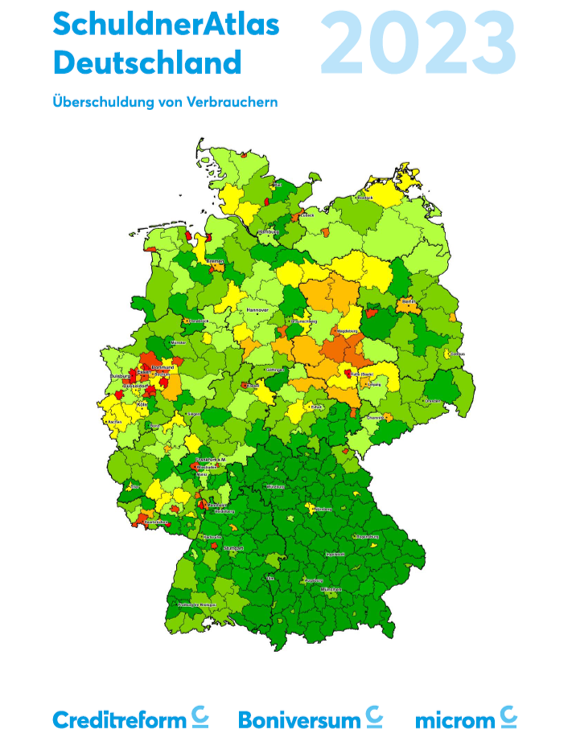
5.65 million citizens over-indebted / “hidden increase” in over-indebtedness / over-indebtedness ratio of 8.15 percent / trend reversal due to persistent inflation and high interest rates / recession as a driver of over-indebtedness

25. October 2023
Constricted by bureaucracy, unsettled by the economy and paralyzed by rising costs - Creditreform's current analysis of the economic situation and financing in medium-sized businesses shows very clearly: Companies in Germany are looking bleakly into the near future. They spend a lot of time and energy trying to cope with the general conditions instead of investing resources in further development. How long can this last?