
Achieving strong economic performance is the ultimate goal for every business. While this may seem obvious, it requires a series of actions influenced by factors specific to the company, such as industry, size, and location, as well as elements common across all businesses. One critical aspect is risk management: understanding in advance whether a partner is highly exposed to adverse events can help prevent harmful scenarios or mitigate issues through timely corrective measures.
Evaluating a business partner is a multifaceted process, especially in today’s complex and global environment, where companies face diverse and sometimes unexpected risks. Partners may include customers, suppliers, or distributors, each establishing different types of relationships within the organization. A structured evaluation approach is essential to ensure resilience and safeguard business continuity.
Today, business information is far more complex than in the past, when it was primarily focused on creditworthiness. Evaluating a partner now requires analyzing a broader range of critical data, sourced and processed by providers capable of aggregating insights from multiple channels.
Business information providers must evolve into true hubs offering a holistic view of risk from different perspectives—so companies can make decisions based on deeper awareness and knowledge. Without this approach, unforeseen risks can lead to severe financial consequences.
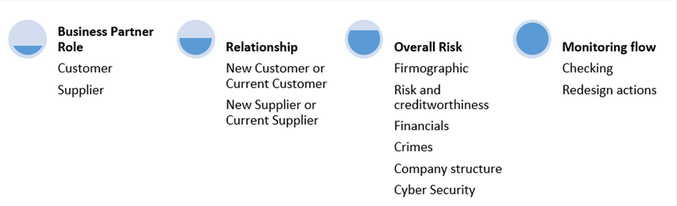
The first step is understanding the role of the business partner, a term that covers customers, prospects, suppliers, potential suppliers, distributors, and potential distributors. While these categories share common traits, each has unique characteristics and business implications.
Analyzing a partner is essential for economic performance. For customers or prospects, the focus is on generating healthy sales; for suppliers, it’s about ensuring reliability and capability to deliver goods and services. A structured evaluation process is key to safeguarding growth and resilience.
Building a safe and reliable relationship with business partners is essential for long-term success. The ability to anticipate whether a customer, or potential customer will pay consistently, maintain strong creditworthiness, and demonstrate overall financial stability is critical.
Equally important is ensuring they are not involved in financial crimes, have a transparent corporate structure, and present a low risk of cyber exposure. These insights form the foundation for creating strong, sustainable partnerships and driving business growth.
Knowing in advance whether a supplier or potential supplier—has a transparent corporate structure, strong creditworthiness, low exposure to cyber risks, and no involvement in financial crimes is crucial. These insights provide confidence that goods and services will be delivered as agreed, ensuring continuity in production and preventing costly disruptions in the supply chain.
The nature of your relationship with a business partner, whether brand new or long-standing— matters, but it should never dictate the depth of risk evaluation. Even familiar partners require thorough and ongoing assessment, as economic conditions can shift rapidly and global markets are becoming increasingly complex. Maintaining a comprehensive understanding of risk is not just good practice; it’s essential for resilience and sustainable growth.
When analyzing a business partner, the quality of information is critical. While vast amounts of data are available and big data remains a trending topic, the real challenge lies in identifying what truly matters for evaluation. More data does not automatically mean better insights. High-quality information requires careful management, from compliance with regulations to source reliability and independence.
Traditionally, companies relied on past experience, market references, or even rumors to assess partners. In today’s complex global environment, that approach is no longer enough. Hidden risks can easily lead to flawed assessments and costly decisions. A structured, data-driven process is essential to uncover potential threats and make informed choices.
Risk must be assessed from multiple angles: reditworthiness, financial crime exposure, regulatory compliance, corporate structure, shareholding, and cyber vulnerability. Adopting this holistic approach enables companies to achieve key objectives: strong financial performance, market share growth, competitive advantage, operational stability, and a solid reputation.
Starting with customers, this global perspective helps safeguard sales and minimize payment risks. On the procurement side, it ensures suppliers have the stability and capacity to deliver without disrupting the supply chain. For both customers and suppliers, monitoring changes over time is critical. Even wellknown partners can present hidden risks if not continuously evaluated.
In today’s interconnected world, where business relationships span multiple countries, ongoing verification across diverse risk factors is essential. Global trade adds complexity, data availability, updates, and compliance with local legislation can all pose challenges. A structured, dynamic evaluation process is no longer optional; it’s a strategic necessity.
SkyMinder, CRIF’s global platform for international business information, acts as a central hub for evaluating B2B trade risks across worldwide markets. It covers all countries and jurisdictions, regardless of data complexity, accessibility challenges, or political and economic conditions, thanks to an integrated ecosystem that connects CRIF group members with leading local information providers. This direct link to the territory ensures deep, accurate insights and a clear understanding of potential datarelated issues.
SkyMinder guarantees the highest quality standards by combining official sources, negative records, and company structure details with value-added information such as credit limits. It also delivers critical compliance data, including corporate structure and shareholder checks, financial crime screening, and even cyber risk analysis—providing businesses with a comprehensive view to make informed, confident decisions.
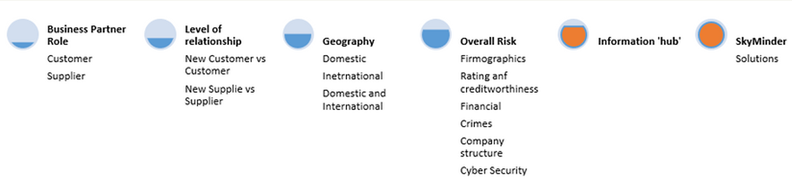
In today’s complex business landscape, risk must be assessed from multiple perspectives—and that requires the right information providers with a truly global approach. With SkyMinder, you can access reliable data on companies worldwide, empowering you to make informed decisions that drive growth and strengthen your business strategy.
Source: CRIF
Write a comment